AI Agents in Creative Agencies: How Intelligent Automation is Reshaping the Industry in 2026
S.C.G.A. Team
March 24, 2026
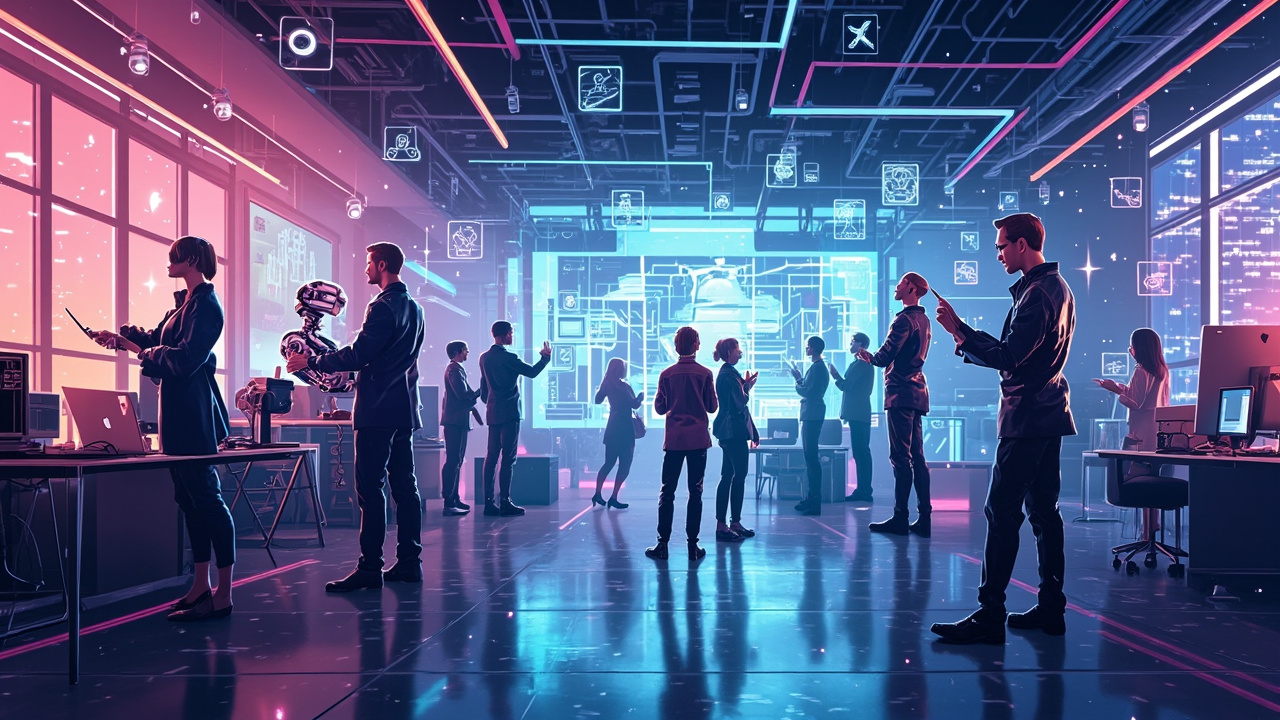
Explore how AI agents are revolutionizing creative agencies in 2026, enabling teams to automate repetitive tasks and focus on high-impact creative work.
The creative agency landscape is undergoing its most significant transformation since the digital revolution. In 2026, AI agents have moved from experimental tools to essential team members, fundamentally reshaping how creative agencies operate, collaborate, and deliver value to clients. Far from replacing human creativity, these intelligent systems are amplifying it—freeing talented professionals from repetitive tasks and enabling them to focus on the strategic thinking and imaginative problem-solving that only humans can provide. Understanding how to integrate AI agents effectively has become not just a competitive advantage but a survival imperative for agencies that want to thrive in this new era.
The Evolution from Tools to Teammates
The journey of AI in creative agencies has been remarkable. Just a few years ago, AI was relegated to narrow functions—automated email responses, basic content suggestions, or simple data analysis. Today, AI agents operate with a level of sophistication that blurs the line between tools and collaborators. Modern AI agents can manage complex project workflows, coordinate across multiple creative disciplines, and even contribute meaningfully to brainstorming sessions.
This evolution has been driven by advances in large language models, computer vision, and reasoning capabilities. Contemporary AI agents understand context, maintain consistency across long projects, and can adapt their outputs based on feedback. They remember preferences, learn from corrections, and continuously improve their performance within established parameters. For creative agencies, this means AI can now handle not just mechanical tasks but cognitively demanding work that previously required human oversight.
The agencies winning in this environment are those that have moved beyond viewing AI as a cost-cutting mechanism. Instead, they approach AI agents as force multipliers for their most talented people. Designers complete more projects without compromising quality. Copywriters produce stronger drafts faster. Strategists develop deeper insights with less grunt work. The net effect is a dramatic expansion of what a skilled team can accomplish.
Understanding AI Agents in the Creative Context
AI agents differ fundamentally from the AI tools that preceded them. Traditional AI tools respond to single prompts and complete individual tasks. AI agents, by contrast, operate with greater autonomy and persistence. They can break down complex objectives into steps, execute those steps across multiple systems, and iterate toward goals without constant human intervention.
In a creative agency setting, this distinction matters enormously. A content AI might help write a single blog post when prompted. An AI agent can manage an entire content calendar—researching topics, coordinating with editorial calendars, drafting and revising pieces, optimizing for SEO, and preparing publication-ready deliverables across multiple channels. The agent handles the logistics while human strategists focus on tone, brand voice, and creative direction.
The spectrum of AI agent capabilities spans from narrow task automation to complex multi-step reasoning. At the simpler end, agents handle predictable, rule-based workflows: organizing file structures, generating standard reports, managing approval queues. At the more sophisticated end, agents tackle ambiguous challenges requiring judgment: adapting creative concepts based on client feedback, identifying market positioning opportunities, or coordinating complex multi-channel campaigns that require consistent messaging across diverse touchpoints.
Automating the Creative Workflow
Creative agencies are discovering that the most significant gains from AI agents come not from automating creative work itself but from streamlining everything surrounding it. Project management, resource allocation, communication coordination, and administrative tasks consume a substantial portion of agency capacity. AI agents are proving exceptionally effective at eliminating this overhead.
Project Orchestration and Tracking
Managing creative projects involves countless moving parts—deadlines, dependencies, stakeholder approvals, asset handoffs, and timeline adjustments. AI agents now serve as tireless project orchestrators, monitoring progress across multiple workstreams, flagging potential bottlenecks before they become problems, and proactively nudging team members about upcoming commitments.
These systems maintain comprehensive project visibility that would be impossible for human managers to achieve manually. They track which assets are approved, which require revision, and which deliverables are waiting on external inputs. When priorities shift—as they inevitably do in agency life—AI agents rapidly reassess schedules and resource allocation, presenting human managers with clear options rather than requiring them to rebuild everything from scratch.
Client Communication Management
Client-facing communication represents another area where AI agents deliver tremendous value. Beyond simple email management, agents now handle comprehensive communication workflows: preparing status update reports, drafting meeting agendas, summarizing discussion outcomes, and following up on action items. They ensure nothing falls through the cracks even during periods of intense activity.
Perhaps more importantly, AI agents help maintain communication consistency and quality. They can prepare first-draft responses to common client inquiries, flag potentially sensitive communications that require senior review, and ensure all client-facing materials adhere to brand guidelines. This doesn’t replace human relationship management—it enhances it by ensuring client communications remain consistently professional and responsive.
Content Operations at Scale
Content-driven agencies have embraced AI agents most enthusiastically, and for good reason. AI agents transform content operations from a series of manual handoffs into streamlined pipelines. Research, drafting, editing, optimization, and distribution can now flow together with minimal manual intervention between stages.
AI agents maintain content calendars, monitor industry trends for relevant topics, and flag content opportunities before competitors identify them. They adapt content for different platforms and audiences while maintaining core messaging consistency. For agencies managing content for multiple clients across numerous channels, these capabilities translate directly to competitive advantage and improved profitability.
The New Creative Toolkit
While AI agents excel at operational tasks, their impact on creative work itself deserves careful examination. The question facing many agency leaders is not whether AI can assist with creative tasks, but how to leverage these capabilities without diluting the quality or distinctiveness that makes their work valuable.
Rapid Prototyping and Ideation
Creative ideation has traditionally been a time-intensive process requiring significant upfront investment before clients see results. AI agents are changing this equation dramatically. Creative teams now use AI to generate numerous concept variations rapidly, explore visual directions quickly, and test messaging approaches at scale before committing resources.
This capability shifts the creative process toward refinement rather than creation from scratch. Rather than spending days developing a single concept, teams can generate dozens of strong starting points in hours and then apply human creativity to elevate the most promising directions. The result is often both higher quality work and faster delivery—outcomes that would seem contradictory in traditional agency workflows.
Design Systems and Brand Consistency
Maintaining brand consistency across projects and channels has always challenged large agencies managing numerous concurrent client relationships. AI agents now serve as guardians of brand consistency, monitoring outputs against established guidelines and flagging deviations before they reach clients.
Beyond passive monitoring, AI agents actively enforce brand standards. They can check whether visual assets adhere to color palettes, typography guidelines, and imagery styles. They verify messaging consistency across channels and ensure all deliverables meet technical specifications. This automated quality assurance frees senior designers to focus on strategic brand development while ensuring execution quality remains high across routine work.
Research and Insight Generation
Creative strategy has always relied on research and insight, but comprehensive research has historically been reserved for larger budgets and longer timelines. AI agents democratize sophisticated research capabilities, enabling even smaller agencies to deliver strategy grounded in deep audience understanding.
Agents can synthesize information from numerous sources—market reports, competitor analyses, social media trends, customer feedback—to identify patterns and opportunities that might escape human notice. They monitor cultural conversations and emerging trends, alerting creative teams to relevant developments before they become mainstream. This real-time intelligence enables agencies to create work that feels culturally attuned rather than based on outdated assumptions.
Navigating the Human-AI Collaboration
The integration of AI agents into creative workflows raises important questions about the nature of creativity itself and the value human talent provides. Forward-thinking agencies are approaching these questions thoughtfully, recognizing that the most effective solutions emerge from genuine collaboration between human creativity and artificial intelligence.
The agencies navigating this best recognize that AI augments rather than replaces human creativity. The unique value humans provide—emotional intelligence, cultural sensitivity, intuitive judgment, ethical reasoning, and genuine originality—becomes more valuable as AI handles mechanical tasks. Rather than competing with AI, exceptional creative talent becomes more productive and impactful when freed from tasks that don’t require their particular capabilities.
Developing effective human-AI collaboration requires intentional workflow design. Agencies must clearly define where AI contributes and where human judgment remains essential. They must establish feedback mechanisms that help AI improve over time while maintaining quality standards. And they must invest in training their teams to work effectively alongside AI—understanding both its capabilities and its limitations.
The most sophisticated agency leaders also recognize the importance of transparency with clients about AI use. Forward-looking agencies openly discuss how they use AI, positioning it as a tool that enhances rather than replaces human creativity. This transparency builds trust and helps clients understand the value proposition of AI-enhanced creative work.
Measuring the Impact
Quantifying AI agent impact on creative agency performance requires metrics beyond traditional efficiency measures. While time savings and cost reduction matter, the most meaningful metrics capture quality improvements and strategic value created.
Productivity Metrics
Agencies successfully implementing AI agents typically see dramatic improvements in output capacity. Teams complete more projects per period without proportional increases in headcount. Revision cycles shorten as AI catches errors earlier and generates stronger initial drafts. Administrative overhead shrinks as agents handle coordination and documentation tasks.
These productivity gains compound over time. As AI agents learn from agency-specific contexts and accumulate institutional knowledge, their effectiveness continues to improve. Early adopters are establishing operational flywheels that become increasingly difficult for slower-moving competitors to replicate.
Quality Indicators
Quality measurement is more nuanced than productivity tracking, but agencies report meaningful improvements across multiple quality dimensions. Client satisfaction scores improve as deliverables become more polished and consistent. Creative work receives more favorable feedback when AI handles technical execution details, allowing human creatives to focus on strategic and conceptual elements. Error rates decline as AI systems catch issues before they reach clients.
Perhaps most significantly, agencies report that AI enables them to take on more ambitious creative challenges. Projects that would have been too resource-intensive under traditional approaches become feasible when AI agents handle substantial portions of execution work. This expanded creative ambition strengthens portfolios and attracts higher-value client relationships.
The Road Ahead
The trajectory of AI development suggests that capabilities will continue expanding rapidly. Agencies that establish strong AI integration practices now position themselves for accelerated capability growth as AI agents become even more sophisticated.
The most significant developments on the horizon involve AI agents that can manage increasingly complex creative workflows with minimal human guidance. Rather than handling discrete tasks within established processes, future agents will design and optimize those processes themselves—identifying inefficiencies, proposing improvements, and implementing changes that enhance creative output and operational effectiveness.
Integration across tools and systems will deepen, enabling AI agents to serve as comprehensive creative partners rather than specialized assistants. The boundaries between research, strategy, design, and production will blur as AI manages handoffs and maintains consistency across creative disciplines. Agencies that prepare for this convergence now will adapt more smoothly as it unfolds.
Sustainability and Ethical Considerations
As AI becomes more central to agency operations, sustainability and ethics demand increasing attention. The computational resources required to power AI systems have environmental implications that responsible agencies must consider. Beyond environmental concerns, questions about attribution, originality, and the role of human creators in an AI-enhanced world require thoughtful engagement.
Ethical AI use in creative agencies means maintaining transparency about how AI contributes to work, ensuring AI systems don’t perpetuate biases or produce harmful content, and preserving meaningful human involvement in creative decisions. It means treating AI as a tool that enhances human creativity rather than a replacement for it. Agencies that establish clear ethical frameworks now will navigate emerging challenges more effectively than those that treat AI ethics as an afterthought.
Sustainability in agency AI use extends beyond environmental considerations to encompass the sustainability of human creativity itself. Using AI to augment rather than replace human creative development ensures that teams continue growing their capabilities rather than atrophying through over-reliance on AI assistance. The most successful agencies balance AI efficiency gains with continued investment in human creative development.
Choosing the Right AI Partner
Agencies integrating AI agents face numerous options, from building custom solutions to partnering with established AI platforms. The right approach depends on agency size, technical capabilities, budget constraints, and strategic priorities.
For most agencies, a hybrid approach offers the best balance. Leveraging established AI platforms for core capabilities while developing proprietary systems for differentiating processes creates both flexibility and competitive advantage. This approach requires careful vendor management and ongoing evaluation as the AI landscape continues evolving rapidly.
Technical infrastructure matters significantly for AI agent effectiveness. Agents need access to relevant data, integration with creative tools, and robust security frameworks. Agencies that invest in proper technical foundations enable AI agents to operate more effectively while maintaining the security and privacy standards clients expect.
Building Your AI-Ready Agency
Transitioning to AI-enhanced operations requires more than implementing new tools. It demands organizational change that touches culture, processes, and skills. Agencies that approach this transformation strategically position themselves for sustained success.
Leadership sets the tone for AI integration. Leaders who embrace AI as a strategic opportunity rather than a threat to existing business models create cultures more receptive to experimentation and adaptation. They model appropriate AI use, celebrate AI-enabled successes, and create space for teams to learn new ways of working.
Skills development becomes essential as AI changes the capabilities agencies need. Teams require training not just in using AI tools but in the higher-order thinking that AI cannot replicate. Critical thinking, creative direction, client relationship management, and ethical reasoning become more valuable as AI handles mechanical tasks. Investing in these capabilities prepares agencies for a future where human and artificial intelligence collaborate increasingly closely.
Conclusion
AI agents are fundamentally reshaping the creative agency landscape in 2026, creating both opportunities and challenges for agencies willing to embrace intelligent automation thoughtfully. The agencies thriving in this environment share common characteristics: they view AI as augmentation rather than replacement, invest in both technology and human capabilities, and maintain clear ethical frameworks for AI use.
The transformation is not without its complexities. Navigating human-AI collaboration, measuring meaningful impact, and maintaining creative quality while increasing efficiency require ongoing attention and refinement. But for agencies that approach AI integration strategically, the rewards are substantial—expanded creative possibilities, improved operational efficiency, and stronger competitive positions in an increasingly demanding market.
At S.C.G.A., we have embraced AI agents as essential tools in our creative workflow. We help our clients leverage intelligent automation to achieve their marketing objectives while maintaining the creative excellence and strategic thinking that drive real business results. Contact us today to learn how we can help your organization navigate the AI-enhanced future of creative work.`;};