AI Customer Service: How to Enhance Customer Experience and Efficiency
S.C.G.A. Team
March 17, 2026
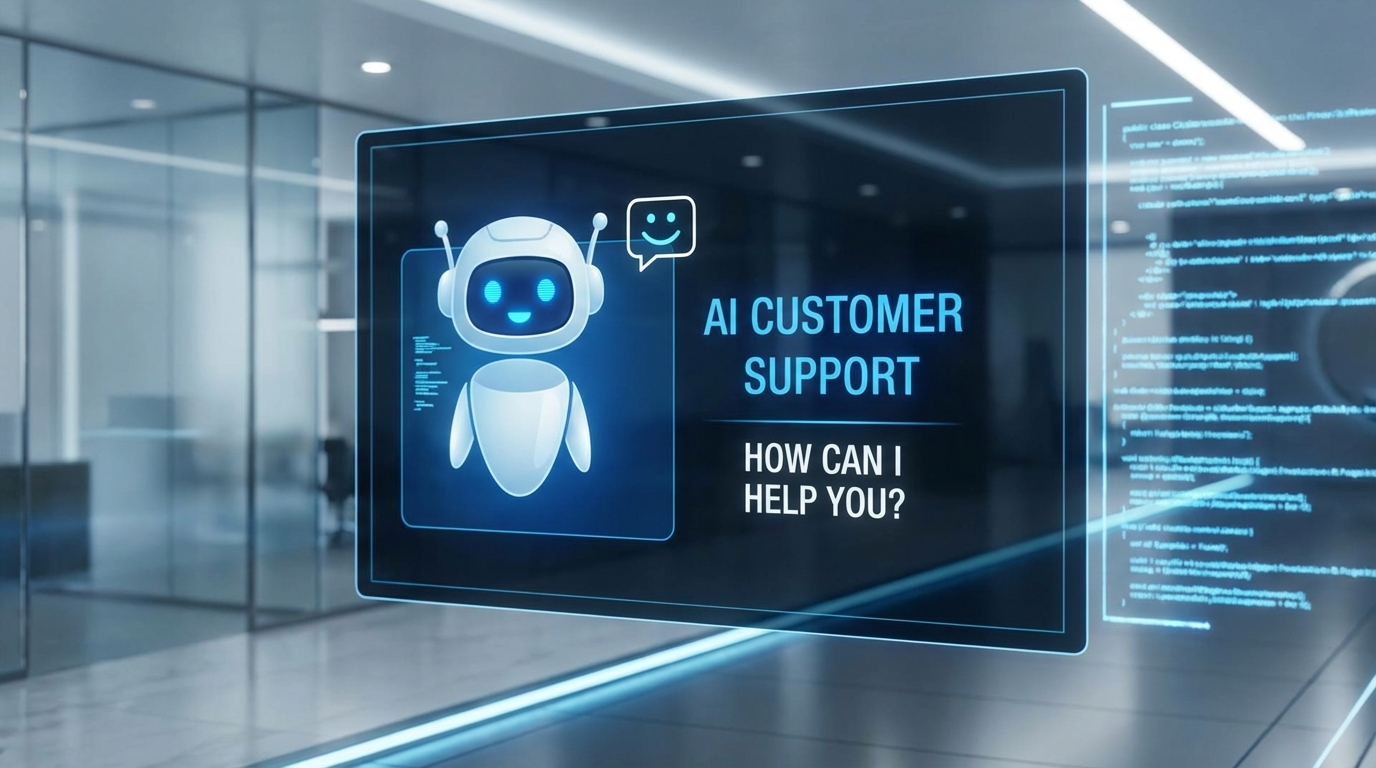
AI customer service enhances customer experience and efficiency.
In today’s digital age, customer service has become a critical factor in business success. Traditional customer service methods can no longer meet modern customer expectations. Artificial Intelligence (AI) is revolutionizing customer service, from intelligent chatbots to sentiment analysis, redefining how businesses interact with customers.
What is AI Customer Service?
AI customer service refers to using artificial intelligence technology to automate and optimize customer service processes. This includes intelligent chatbots, voice assistants, sentiment analysis, and automated ticket processing systems. These technologies can operate 24/7, instantly respond to customer inquiries, while continuously learning and improving to provide better service.
Key Benefits of AI Customer Service
1. 24/7 Availability
AI systems can operate around the clock without breaks. This means customers can get help anytime without waiting for business hours. This is particularly important for businesses serving global customers across different time zones.
2. Instant Response
AI can respond to customer queries in milliseconds, which is unmatched by human agents. Instant responses not only improve customer satisfaction but also reduce the risk of customer churn.
3. Consistency
AI systems respond to each customer with the same standards and quality. This ensures consistent service quality, which is essential for building brand image and customer trust.
4. Cost-Effectiveness
Although initial investment in AI systems may be higher, in the long run, they can significantly reduce labor costs. One AI chatbot can replace multiple human agents while handling numerous queries simultaneously.
5. Data Analytics Capability
AI systems can collect and analyze vast amounts of customer interaction data, providing valuable business insights. This data helps businesses understand customer behavior patterns, preferences, and pain points.
Types of AI Customer Service
1. Intelligent Chatbots
Intelligent chatbots are the most common form of AI customer service. They can interact with customers through text or voice, answer FAQs, handle simple transactions, and even manage complex customer service issues.
2. Voice Assistants
Voice assistants are transforming customer service. Customers can get help through voice commands, which is especially useful when hands are busy or typing is inconvenient.
3. Sentiment Analysis
Sentiment analysis AI can detect customer emotions, helping businesses identify dissatisfied customers and intervene in time. This technology analyzes customer text or speech to determine their emotional state.
4. Automated Ticket Processing
AI can automatically create, categorize, and prioritize customer service tickets. Through machine learning, the system can identify the urgency and type of tickets, assigning them to appropriate staff.
5. Predictive Customer Service
Advanced AI systems can analyze customer behavior data to predict customer needs and potential problems. Businesses can proactively reach out to customers before issues arise.
Best Practices for Implementing AI Customer Service
1. Start Simple
It’s recommended to start with simple use cases when implementing AI customer service. For example, use AI to handle FAQs and simple inquiries first, then expand to more complex tasks as the system matures.
2. Maintain Human Element
While AI can handle most customer service needs, complex or emotional situations still require human intervention. A successful AI customer service strategy should combine AI with human touch.
3. Continuous Learning and Optimization
AI systems need time and data to learn and improve. Businesses should establish feedback loops to gather insights from customers and service staff to help optimize the AI system.
4. Transparency and Disclosure
Businesses should clearly inform customers whether they are interacting with AI or humans. This transparency builds trust and manages customer expectations.
5. Multi-Channel Integration
Modern customers expect consistent service across any channel. Businesses should ensure AI customer service works seamlessly across websites, mobile apps, social media, and other channels.
Implementing AI Customer Service: A Practical Guide
Successfully implementing AI customer service requires careful planning, execution, and ongoing optimization. Organizations that approach AI customer service strategically achieve significantly better results than those that deploy technology without adequate preparation.
Starting with Clear Objectives
Begin with specific, measurable objectives. Rather than “improve customer service,” define goals like “reduce average handling time by 30%” or “increase first-contact resolution rate to 75%.” Clear objectives guide technology selection, implementation priorities, and success measurement. Define both efficiency metrics like cost per contact and quality metrics like customer satisfaction scores.
Mapping Customer Journeys
Before implementing AI, thoroughly understand your customer journeys. Map common interaction paths, identify pain points, and determine where AI can provide the most value. Focus initial AI implementation on high-volume, repetitive interactions that consume agent time without requiring complex judgment. Save complex queries for human agents.
Building a Knowledge Base
AI customer service systems require comprehensive, accurate knowledge bases. Invest time in structuring product information, policies, and common questions into formats AI can effectively use. A well-organized knowledge base enables AI to provide accurate, consistent answers. Regular updates ensure the knowledge base remains current as products and policies evolve.
Designing Effective Handoffs
The transition between AI and human agents must be seamless. Ensure context transfers completely—customers should never repeat information they’ve already provided. Design escalation triggers that identify when AI should hand off to humans. Human agents should see full conversation history and AI analysis to enable informed assistance.
Measuring AI Customer Service Success
Comprehensive measurement ensures your AI customer service investment delivers genuine value. Track metrics across multiple dimensions including efficiency, quality, and customer experience.
Efficiency Metrics
Measure automation rate (percentage of interactions handled without human involvement), average handling time, and cost per interaction. Track AI accuracy rates and issue resolution percentages. Compare these metrics against pre-AI baselines and against industry benchmarks to understand performance.
Quality Metrics
Track customer satisfaction through post-interaction surveys. Measure first-contact resolution rates and complaint escalation rates. Monitor sentiment analysis of customer feedback to identify emerging issues. Quality metrics reveal whether efficiency gains come at the cost of service quality.
Continuous Improvement
AI customer service requires ongoing optimization. Analyze conversations that required human escalation to identify improvement opportunities. Update AI responses based on new products, policies, and common questions. A/B test alternative responses to identify more effective approaches. Regular tuning keeps AI systems performing at their best.
The Future of AI Customer Service
AI customer service continues to evolve rapidly. Emerging capabilities will expand what’s possible while creating new opportunities for differentiation.
Multimodal AI
Future AI systems will seamlessly combine text, voice, and visual inputs. Customers will describe issues while showing images or documents, and AI will understand the complete context. This multimodal capability will enable AI to handle increasingly complex interactions that require multiple types of information.
Proactive Customer Service
AI will shift from reactive to proactive customer service. Systems will identify potential problems before customers report them, reaching out with solutions before issues escalate. This proactive approach transforms customer service from cost center to revenue driver through improved retention and satisfaction.
Emotional Intelligence
AI systems are becoming increasingly sophisticated at recognizing and responding to customer emotions. Detecting frustration, satisfaction, or confusion enables appropriate responses that acknowledge customer feelings. This emotional intelligence creates more empathetic interactions that build customer relationships.
The Technology Behind AI Customer Service
Modern AI customer service relies on sophisticated technology infrastructure that enables fast, accurate, and natural interactions. Understanding this technology helps organizations evaluate solutions and make informed implementation decisions.
Natural Language Understanding
Modern NLU systems go beyond simple keyword matching to understand meaning, context, and intent. Advanced language models can interpret ambiguous queries, handle slang and typos, and maintain context across multi-turn conversations. The quality of NLU directly impacts every other aspect of AI customer service.
Dialogue Management Systems
Dialogue management controls the flow of conversation, determining when to ask for clarification, when to provide information, and when to escalate to humans. Sophisticated dialogue managers maintain conversation state, handle interruptions gracefully, and manage multi-topic conversations that span multiple interactions.
Knowledge Base Integration
AI customer service effectiveness depends heavily on knowledge base quality. Modern systems integrate with diverse knowledge sources including product documentation, FAQ databases, and policy documents. Intelligent search retrieves relevant information from large, unstructured knowledge bases.
Sentiment and Emotion Detection
Detecting customer emotions enables appropriate responses to frustrated or distressed customers. Modern systems analyze voice tone, word choice, and conversation patterns to identify emotional states. When frustration is detected, systems can escalate to human agents, adjust communication style, or offer compensation proactively.
AI Customer Service Best Practices
Successful AI customer service implementations share common characteristics that distinguish them from failed projects. Following established best practices improves implementation success rates.
Start with High-Value, Low-Risk Interactions
Initial AI deployments should focus on interactions where mistakes are acceptable and value is high. FAQ responses and order status inquiries offer quick wins while building organizational experience. Higher-risk interactions like complaints and billing disputes should be automated only after gaining confidence through simpler use cases.
Design for Seamless Escalation
Every AI customer service deployment should include graceful escalation to human agents. AI should accurately recognize when problems exceed its capabilities and hand off smoothly. Human agents should receive complete context from the AI interaction, eliminating the frustration of repeating information.
Measure What Matters
Metrics should align with business objectives, not just operational efficiency. Track customer satisfaction, issue resolution rates, and cost per contact. Automated contact resolution rates indicate automation success, but customer effort to achieve resolution matters equally.
Continuously Learn and Improve
AI customer service systems improve over time through learning. Establish processes for reviewing AI performance, identifying failure patterns, and updating AI responses. Human feedback from escalated interactions provides valuable training signal. The best implementations treat AI as continuously improving rather than a fixed system.
Building a Customer Service AI Roadmap
Implementing AI customer service requires strategic planning that spans multiple phases. Organizations that approach AI adoption systematically achieve better results than those that deploy technology without adequate preparation.
Assessment and Planning
Begin by assessing current customer service operations, identifying pain points, and evaluating data availability. Understanding where AI can provide the most value guides prioritization of implementation efforts.
Proof of Concept Development
Start with a focused proof of concept that demonstrates value while managing risk. Select a well-defined use case with clear success metrics and manageable scope.
Scaling and Integration
Expand successful pilots into full production deployment, integrating AI seamlessly with existing systems and workflows. Continuous monitoring and optimization ensures ongoing improvement.
Conclusion
AI customer service has become an indispensable part of modern business. Its efficiency improvements, cost savings, and customer satisfaction enhancements are unmatched by traditional customer service methods.
At S.C.G.A., we specialize in helping businesses implement AI customer solutions. Contact us today to learn how we can help you enhance your customer service capabilities!