How AI is Revolutionizing Horse Racing Predictions: A Complete Guide
S.C.G.A. Team
March 13, 2026
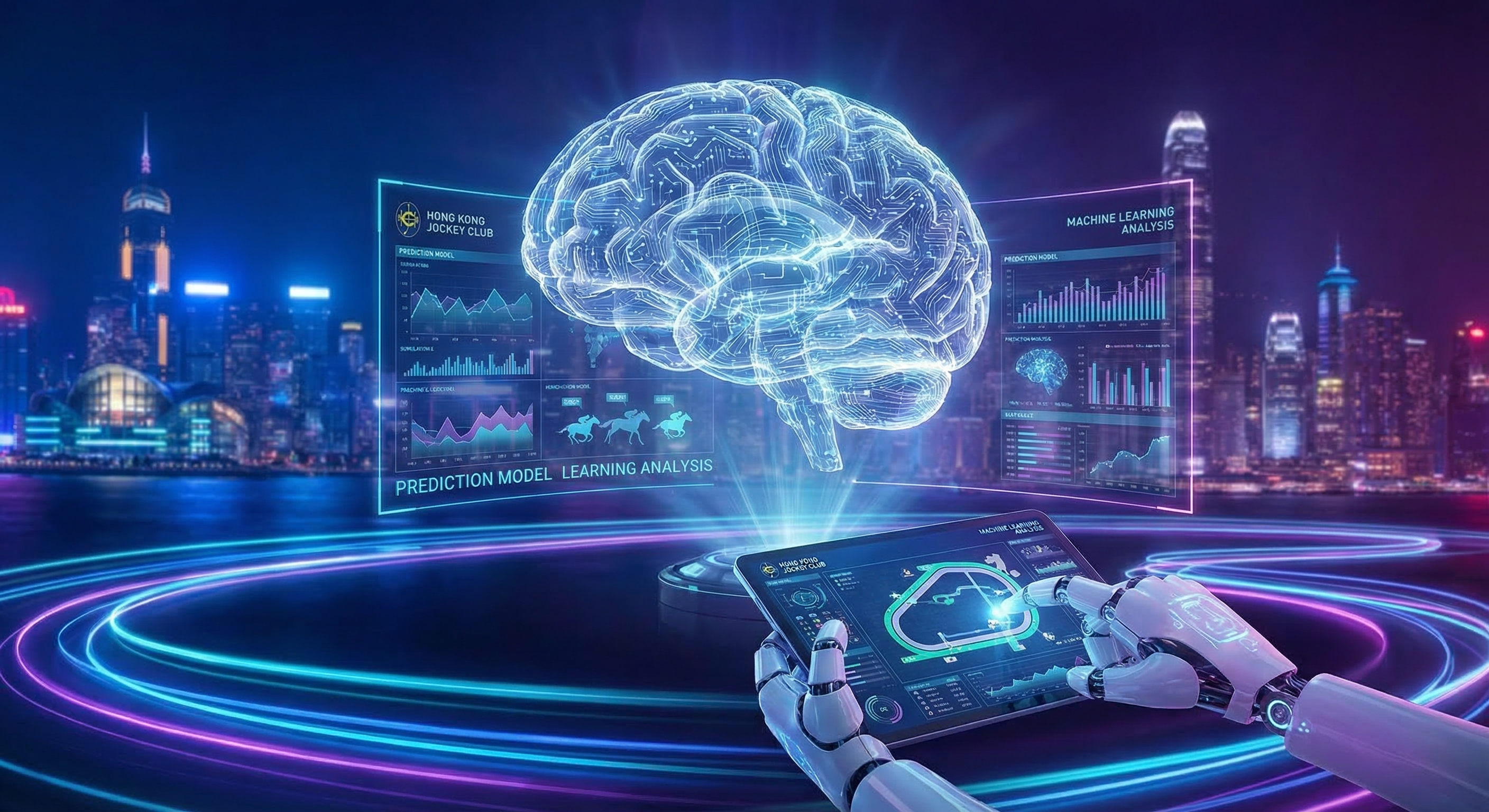
AI is revolutionizing horse racing predictions through advanced algorithms and comprehensive data analysis.
Horse racing has always been a sport where every detail matters. From the horse’s pedigree and training history to track conditions, weather factors, and jockey performance - every element can influence the outcome. Today, artificial intelligence and machine learning are revolutionizing how we analyze and predict horse racing outcomes, bringing unprecedented accuracy to what was traditionally considered an art form dependent on human intuition and experience.
What is AI Horse Racing Prediction?
AI horse racing prediction uses advanced machine learning algorithms to analyze vast amounts of historical and real-time data. Unlike traditional methods that relied heavily on human expertise and intuition, modern AI-powered prediction systems can process millions of data points in seconds, identifying patterns that would be impossible for humans to detect.
According to Racing Post, the integration of advanced analytics in horse racing has transformed from a niche practice to an industry-wide revolution. Modern AI systems can analyze historical performance data, real-time odds movements, track conditions, weather patterns, and even social sentiment to generate comprehensive predictions.
The fundamental difference between traditional handicapping and AI-powered prediction lies in the scale and depth of analysis. While a human expert might consider perhaps 20-30 variables when evaluating a race, sophisticated AI systems can process thousands of variables simultaneously, including subtle interactions between factors that human analysts might overlook.
The Evolution of Horse Racing Analysis
The journey from traditional handicapping to AI-powered predictions has been remarkable. In the early days, horse racing analysis relied purely on human expertise - trainers’ observations, jockeys’ instincts, and bettors’ experience. While valuable, these methods were limited by human cognitive capacity and inherent biases.
The first major shift came with the digitization of racing data in the 1990s, allowing analysts to access historical performances, pedigrees, and statistics through databases. This enabled more systematic analysis but still required significant human interpretation.
Today, we stand at the forefront of a technological revolution where machine learning algorithms can process terabytes of historical data, identify subtle patterns across thousands of races, and generate probability estimates with remarkable accuracy. This evolution represents not just an improvement in prediction accuracy but a fundamental transformation in how we understand and approach horse racing analysis.
Key Technologies Powering AI Racing Predictions
1. TensorFlow and Deep Learning
TensorFlow, Google’s open-source machine learning framework, forms the backbone of many modern racing prediction systems. Its neural network architectures can learn complex non-linear relationships between various factors affecting race outcomes. Deep learning models can automatically extract relevant features from raw data, reducing the need for manual feature engineering.
Convolutional neural networks (CNNs) can analyze racing form, identifying visual patterns in past performance charts. Recurrent neural networks (RNNs) and their variants like LSTM networks excel at modeling sequential data, perfect for analyzing a horse’s performance history over time.
2. PyTorch and Flexible Model Design
PyTorch’s dynamic computation graph allows researchers to experiment with innovative model architectures specifically designed for racing prediction tasks. Its flexibility enables rapid prototyping and experimentation, accelerating the development of more accurate prediction models.
PyTorch’s ecosystem includes specialized libraries for time series analysis and reinforcement learning, both valuable for developing sophisticated racing prediction systems that can adapt to changing market conditions.
3. Scikit-learn for Traditional ML
For more interpretable models and baseline predictions, scikit-learn provides robust implementations of traditional machine learning algorithms. Techniques like random forests, support vector machines, and logistic regression provide valuable baseline models that can be compared against more complex deep learning approaches.
These traditional methods also serve important roles in feature selection and preprocessing pipelines, helping identify the most predictive variables before applying more complex models.
4. XGBoost for Structured Data
XGBoost’s gradient boosting framework excels at handling structured data typical in racing datasets - past performances, pedigree information, and historical odds. Its ability to handle missing values and its built-in regularization make it particularly suitable for the noisy, incomplete data often found in horse racing databases.
XGBoost models can capture complex interactions between features without requiring the extensive hyperparameter tuning needed by neural networks, making them a practical choice for production racing prediction systems.
5. Natural Language Processing
Modern AI systems incorporate NLP to analyze textual data including racing news, trainer comments, and social media sentiment. This additional context can provide valuable insights that pure statistical analysis might miss.
How Machine Learning Transforms Racing Predictions
1. Historical Performance Analysis
Machine learning models analyze thousands of historical races, identifying patterns that humans might miss:
- Past Performance Patterns: How horses perform on different track types, distances, and going conditions. AI can identify subtle patterns like a horse’s tendency to improve or regress at certain distances.
- Class Trends: Progression through different class levels, identifying horses who may be ahead of or behind their current class.
- Rest Periods: Impact of layoff durations on performance, recognizing optimal rest periods for different horses.
- Training Patterns: Work tab analysis and training consistency, detecting signs of fitness improvement or decline.
- Jockey-Trainer Combinations: Historical success rates of partnerships, including specific patterns at certain tracks or distances.
- Weight Changes: Impact of weight variations on performance, including lead pad adjustments and jockey weight changes.
2. Real-time Data Processing
AI algorithms process odds movements, track conditions updates, and last-minute changes:
- Live odds fluctuations and market movements, detecting sharp money that might indicate insider knowledge
- Track condition changes due to weather, updating predictions as conditions evolve
- Late scratching announcements and their impact on race dynamics
- Bet volume patterns indicating where professional money is flowing
- Post-position draw analysis and its interaction with running style
3. Pedigree Analysis
Machine learning evaluates genetic factors, analyzing bloodlines to predict potential racing success:
- Stallion and dam line performance metrics across generations
- Cross-referencing genetic traits with specific race conditions
- Distance and surface breeding preferences inherited from ancestors
- Yearling sale prices as indicators of pedigree quality
4. Environmental Factors
AI systems analyze external factors that can influence race outcomes:
- Weather forecasts and their impact on track conditions
- Race timing and how it affects racing surface
- Track bias analysis identifying advantageous running positions
- Crowd and atmosphere effects on horse behavior
Benefits of AI in Horse Racing
BenefitDescriptionImpact SpeedAI analyzes data millions of times faster than human analystsReal-time insights and rapid model updates AccuracyHigher prediction accuracy through pattern recognitionBetter ROI for betting strategies ConsistencyUnbiased analysis without emotional interferenceLogical, data-driven decisions CoverageProcess more variables than human analysts possibly couldComprehensive analysis of all factors ScalabilityAnalyze unlimited races simultaneously across multiple tracksBroad market coverage and opportunities LearningModels improve over time as they absorb more dataContinuously improving accuracy
Challenges and Limitations
While AI has transformed horse racing predictions, it’s important to acknowledge limitations:
- Data Quality: Predictions are only as good as the data fed into systems. Incomplete or inaccurate historical data can lead to poor predictions.
- Black Swan Events: Unpredictable factors like unexpected accidents, equipment failures, or anomalous horse behavior cannot be reliably modeled.
- Market Efficiency: As more people use AI, odds become more efficient, potentially reducing edge over time.
- Overfitting: Complex models can sometimes learn noise in training data rather than true patterns, leading to poor generalization.
- Concept Drift: Racing conditions and competitive dynamics change over time, requiring models to be regularly retrained.
- Interpretability: Complex deep learning models can be difficult to interpret, making it hard to understand why specific predictions are made.
The Future of AI in Horse Racing
The future of AI in horse racing looks incredibly promising. Emerging technologies and approaches will further enhance prediction capabilities:
1. Federated Learning
Privacy-preserving machine learning will enable collaboration between different racing organizations without sharing sensitive data, leading to more robust models.
2. Reinforcement Learning
AI systems will learn optimal betting strategies through simulation, adapting to changing market conditions in real-time.
3. Quantum Computing
As quantum computing matures, it will enable even more complex optimization problems to be solved, potentially revolutionizing odds calculation and risk management.
4. Internet of Things
Biometric sensors on horses will provide real-time health and performance data, enabling more accurate predictions of race-day performance.
Our Solution: RacingAI
At S.C.G.A. Limited, we’ve developed RacingAI, an advanced horse racing prediction platform using cutting-edge AI technology. Our system combines multiple machine learning approaches to generate comprehensive predictions that consider all relevant factors.
Our team of experts combines deep knowledge of horse racing with advanced technical skills in machine learning and data science. We continuously refine our models to ensure the highest possible accuracy in our predictions.
Conclusion
AI is revolutionizing horse racing predictions. While no system can guarantee winning outcomes, AI provides valuable insights that significantly improve decision-making and enhance the racing experience. The key is to use AI as a tool to augment human expertise rather than replace it entirely.
At S.C.G.A., we’re committed to helping you harness the power of AI for your racing predictions. Our advanced machine learning systems combine cutting-edge technology with deep racing knowledge to deliver predictions you can trust.
Practical Applications: Using AI Predictions Effectively
Building a Betting Strategy
AI predictions are most effective when used as part of a comprehensive betting strategy. Rather than blindly following AI recommendations, consider using predictions to identify value bets where the AI-estimated probability differs significantly from the market odds.
Successful implementation involves setting clear bankroll management rules, establishing stake sizing based on confidence levels, and maintaining discipline through losing streaks.
PortfolioDiversification
Use AI to analyze multiple races simultaneously, building a diversified portfolio across different tracks, race types, and betting markets. This approach helps manage risk while maximizing opportunities.
Live Betting
Real-time AI analysis is particularly valuable for live betting, where odds fluctuate rapidly. AI can identify value opportunities that emerge during the race as odds adjust to developing circumstances.
Risk Management
AI systems can help manage betting risk through position sizing, hedging strategies, and correlation analysis across multiple bets. This sophisticated approach to risk management can protect bankroll during adverse periods.
Technical Implementation: Building AI Racing Systems
Data Collection and Preparation
Building effective AI racing prediction systems requires comprehensive data collection from multiple sources. Historical race results form the foundation, but additional data sources including pedigree databases, training records, weather services, and odds feeds enhance prediction accuracy.
Data cleaning and normalization are critical steps, as racing data from different sources often uses inconsistent formats and terminology.
Feature Engineering
The success of machine learning models depends heavily on the quality of input features. Feature engineering for racing predictions involves creating meaningful variables from raw data, such as speed figures, class adjustments, and form ratings.
Advanced feature engineering also includes creating interaction features that capture relationships between different variables, such as how a horse’s performance is affected by specific race conditions.
Model Selection and Training
Model selection involves choosing appropriate algorithms based on the specific prediction task and available data. Deep learning models excel at capturing complex patterns but require substantial data and computational resources.
Training involves splitting data into training and validation sets, tuning hyperparameters, and implementing cross-validation to ensure models generalize well to new data.
Model Validation and Testing
Rigorous validation is essential to ensure predictions are reliable. This includes backtesting against historical data, out-of-sample testing, and paper trading before deploying with real money.
Continuous Improvement
AI systems require ongoing maintenance and improvement. Regular retraining with new data, monitoring for concept drift, and incorporating new data sources ensure models remain accurate over time.
Conclusion
AI is revolutionizing horse racing predictions. While no system can guarantee winning outcomes, AI provides valuable insights that significantly improve decision-making and enhance the racing experience. The key is to use AI as a tool to augment human expertise rather than replace it entirely.
At S.C.G.A., we’re committed to helping you harness the power of AI for your racing predictions. Our advanced machine learning systems combine cutting-edge technology with deep racing knowledge to deliver predictions you can trust. Contact us today to learn more about how our AI-powered solutions can enhance your horse racing experience.