2024 Government Change Data Capture (AI-driven) — Practical Handbook
S.C.G.A. Team
7 12, 2026
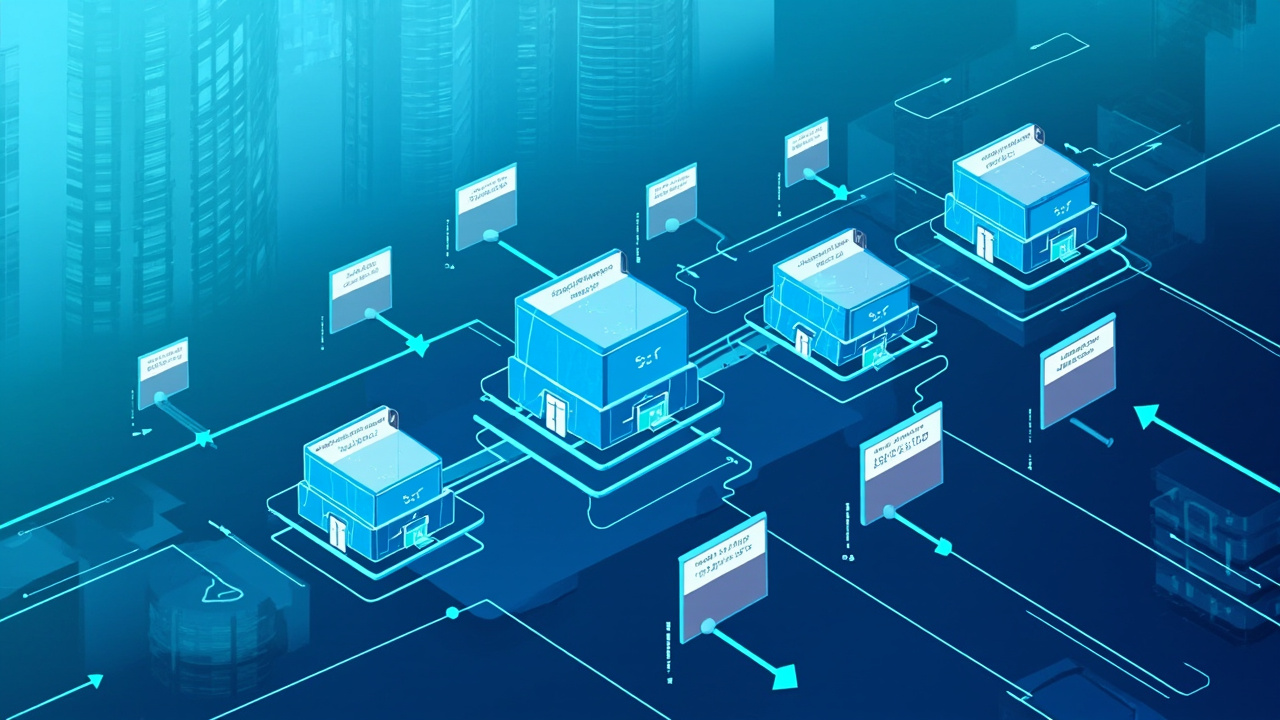
深入分析香港企業在科技應用領域的最新趨勢與實踐。
The Data Velocity Imperative in Hong Kong’s Digital Economy
Hong Kong processes approximately 400,000 cross-border transactions daily through its sophisticated payment infrastructure, with the Faster Payment System handling millions of real-time transfers between mainland China and Hong Kong. Behind these seamless transactions lies an often-overlooked challenge: ensuring that customer data, transaction records, and operational systems remain synchronized across dozens of interconnected platforms without introducing latency or data loss.
For decades, Hong Kong enterprises relied on batch processing—scheduled data extracts that ran overnight or at predefined intervals. While this approach worked when business operated on human timescales, today’s digital economy operates in milliseconds. A logistics company tracking containers through Kwai Tsing Container Terminals cannot wait until morning to update inventory records. A regional bank processing cross-border payments for clients in Central cannot tolerate stale customer records when compliance checks require real-time verification.
Change Data Capture (CDC) emerged as the architectural response to this challenge. Rather than periodically extracting entire datasets, CDC captures every individual change—inserts, updates, deletes—as they occur at the source system. These changes flow through a stream processing architecture, reaching downstream systems within seconds or milliseconds. For Hong Kong enterprises in 2026, CDC isn’t merely an optimization—it’s becoming a competitive necessity.
Understanding the CDC Stack: Debezium, Kafka Connect, and DynamoDB Streams
Before examining Hong Kong-specific applications, we need to understand the three pillars of modern CDC architecture. Each serves a distinct function in the data pipeline, and understanding their roles clarifies why this combination has become the standard for enterprise-grade change data capture.
Debezium is an open-source CDC platform built on Apache Kafka. It connects directly to database transaction logs—MySQL’s binlog, PostgreSQL’s WAL, MongoDB’s oplog—and transforms database changes into a stream of events. What distinguishes Debezium from earlier CDC approaches is its handling of schema evolution and its ability to capture full change history, including the before-image of updated records. When a record changes, Debezium captures not just the new value but the transaction context, enabling sophisticated downstream processing.
Kafka Connect provides the integration framework for moving data between Debezium and target systems. As a distributed service, Kafka Connect runs connector plugins that read from or write to various data sources. Source connectors pull data into Kafka topics; sink connectors push data from Kafka topics to destinations. Kafka Connect handles the operational complexity—partitioning, offset management, fault tolerance, scaling—allowing architects to focus on data flow design rather than infrastructure plumbing.
DynamoDB Streams offers native CDC capability for AWS-hosted applications. When enabled on a DynamoDB table, Streams captures a time-ordered sequence of item-level changes and retains them for 24 hours. This capture includes new items, updated items, and deleted items, with each change record containing both the old and new image of the modified item. For organizations running serverless workloads on AWS, DynamoDB Streams provides a lightweight alternative to deploying Debezium connectors.
The architectural decision between Debezium and DynamoDB Streams typically depends on infrastructure. Organizations running heterogeneous database environments—Oracle on-premises, PostgreSQL on Amazon RDS, MySQL on Azure—benefit from Debezium’s multi-database support. Those standardized on AWS with DynamoDB as the primary data store find DynamoDB Streams offers simpler operational characteristics with lower integration overhead.
Hong Kong Enterprise Integration Patterns: From Trading Systems to Supply Chain
Hong Kong’s business landscape presents distinctive CDC challenges that shaped how enterprises deploy these technologies. Understanding these patterns clarifies both the technical decisions and the business outcomes driving adoption.
Pattern One: Financial Services Compliance Synchronization
Hong Kong’s banks and insurance companies operate under strict regulatory requirements from the Hong Kong Monetary Authority and Securities and Futures Commission. Customer due diligence, transaction monitoring, and fraud detection systems must reflect the latest account changes within seconds, not hours. A major regional insurance provider processing claims for policyholders across Southeast Asia implemented CDC to synchronize customer data from their policy administration system to a fraud detection platform. When an address change occurs, the fraud system receives the update within seconds and can immediately flag any subsequent claims that contradict the new address. This capability reduced investigation time by 40% and caught three fraudulent claims in the first month of operation that would have slipped through batch processing windows.
Pattern Two: Cross-Border Logistics Visibility
The Pearl River Delta represents one of the world’s most complex logistics networks, with goods flowing between Hong Kong, Shenzhen, Guangzhou, and manufacturing hubs throughout southern China. A mid-sized freight forwarder operating from their office in Kwun Tong processed thousands of container movements daily, with customers expecting real-time tracking updates. Their challenge: container status updates arrived from multiple systems—terminal operators, customs authorities, trucking companies—each with different formats and update frequencies. By implementing CDC across their operational database and routing changes through Kafka, they built a unified tracking pipeline that aggregated updates from twelve distinct sources. Container status now propagates to customer portals within 90 seconds of occurrence, down from the previous 15-minute refresh cycle.
Pattern Three: Retail E-Commerce Inventory Accuracy
Hong Kong’s retail sector faces acute challenges with inventory management. Limited warehouse space in urban areas forces retailers to maintain precise inventory visibility across stores, online channels, and distribution centers. A fashion retailer with 45 locations across Hong Kong implemented CDC to synchronize inventory counts between their point-of-sale systems, e-commerce platform, and warehouse management system. When a customer purchases an item in-store, inventory availability updates across all channels within 5 seconds. This real-time synchronization enabled “buy online, pick up in-store” capabilities that increased online sales by 23% while reducing inventory carrying costs by eliminating phantom stock that resulted from synchronization delays.
Building Your CDC Pipeline: Architecture Decisions for 2026
Organizations beginning CDC implementations face several architectural decisions that will shape their data infrastructure for years. These decisions require balancing immediate operational needs against long-term scalability and maintainability.
Schema Evolution and Backward Compatibility
Databases evolve. New columns get added, data types change, tables get renamed. Your CDC pipeline must handle these changes gracefully without breaking downstream consumers. Debezium’s schema registry integration allows you to capture schema history and ensure consumers can interpret both current and historical events. When planning your pipeline, establish governance processes for schema changes and implement version compatibility checks before deploying modifications to production.
Handling High-Volume Sources
Hong Kong’s largest enterprises generate extraordinary data volumes. A payment processor handling millions of daily transactions requires CDC infrastructure that can process thousands of changes per second without introducing noticeable latency. This demands careful partitioning strategy—distributing change events across Kafka partitions based on logical keys that maintain ordering within relevant scopes. It also requires monitoring consumer lag and establishing alerting thresholds that trigger operational response before latency impacts business processes.
Exactly-Once Delivery Semantics
Financial applications require absolute guarantees that every change reaches every destination exactly once, without duplicates or omissions. While Kafka provides at-least-once delivery by default, achieving exactly-once semantics requires additional coordination between producers, consumers, and idempotent sink connectors. For most applications, at-least-once delivery with deduplication at the consumer level provides sufficient correctness. For compliance-critical systems, invest in the additional complexity of transactional CDC.
Disaster Recovery and Multi-Region Deployment
Business continuity planning for CDC systems must consider both data durability and recovery time objectives. Replicating Kafka topics across availability zones protects against infrastructure failures. Debezium’s offset storage in Kafka rather than the connector process ensures that restarts can resume from the exact point of interruption. For organizations with strict recovery requirements, consider multi-region deployment with cross-region replication, though this introduces additional latency considerations.
The 2026 Outlook: CDC as Infrastructure Foundation
As we progress through 2026, Change Data Capture is evolving from a tactical integration tool to a foundational infrastructure component. Several trends are reshaping how Hong Kong enterprises approach CDC architecture.
Event-Driven Architecture Proliferation
The success of CDC pipelines often triggers broader adoption of event-driven patterns. Organizations discover that once data flows as streams, numerous downstream applications benefit from consuming these streams rather than querying databases directly. This realization drives investment in event mesh infrastructure that extends beyond traditional point-to-point CDC into sophisticated event routing and filtering architectures.
Integration with Machine Learning Pipelines
Real-time ML inference requires fresh training data. CDC provides the mechanism for continuously updating feature stores as underlying data changes. A Hong Kong-based credit scoring provider implemented CDC to maintain feature consistency between their training environment and real-time scoring systems, ensuring that model features reflect the same data definitions and temporal characteristics.
Serverless CDC Evolution
AWS and Azure continue expanding serverless CDC options that reduce operational burden. DynamoDB Streams with Lambda triggers already powers numerous lightweight CDC scenarios. Managed Debezium services are emerging that eliminate the operational complexity of self-hosted Kafka clusters, making CDC accessible to organizations without dedicated platform engineering teams.
Conclusion: From Batch to Stream in Hong Kong’s Digital Infrastructure
Hong Kong enterprises that modernize their data infrastructure with CDC patterns gain immediate operational advantages—faster decision-making, reduced reconciliation overhead, improved customer experience—and position themselves for the event-driven architectures that will define enterprise data systems in coming years.
The transition from batch to stream processing represents more than a technical upgrade. It reflects an organizational shift toward real-time awareness as a default operational mode. For Hong Kong’s enterprises competing in Asia’s fastest-moving markets, this shift is not optional—it is the foundation upon which competitive advantage is built.
Whether you operate from Central’s financial towers, Kwun Tong’s industrial blocks, or the logistics corridors of the New Territories, your data infrastructure should move at the speed of your business. Change Data Capture with Debezium, Kafka Connect, and DynamoDB Streams provides the technical means to achieve that velocity. The question is no longer whether to implement CDC, but how quickly you can modernize your pipeline to meet the expectations of 2026’s digital economy.
🎙️ Listen to this episode
Or subscribe on your favourite platform: