Real-time Systems: Core Strategies for Building Low-Latency Applications in 2026
S.C.G.A. Team
April 15, 2026
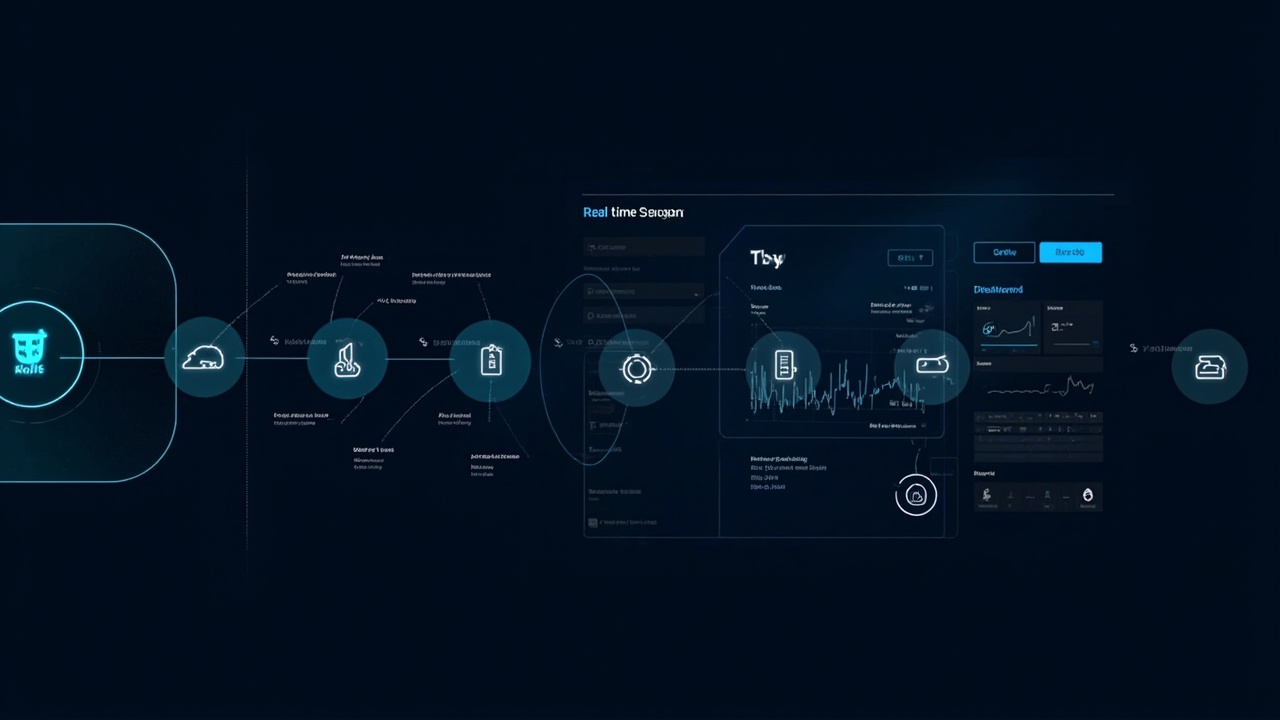
This article delves into the core strategies for real-time system architecture in 2026, covering WebSocket, Server-Sent Events, horizontal scaling, and monitoring best practices.
Real-time Systems: Core Strategies for Building Low-Latency Applications in 2026
User expectations have fundamentally shifted in 2026’s internet landscape. Waiting for page reloads and refreshing to check updates are behaviors that have almost disappeared from modern web applications. Instant feedback, live updates, and millisecond-level responses are no longer exclusive to big tech — they are baseline expectations for all applications.
Whether you’re building collaboration tools, financial trading platforms, online games, or real-time notification systems, real-time system design is the critical factor that determines success or failure. This article explores the core strategies for building reliable real-time applications in 2026.
What Are Real-time Systems?
Real-time systems are computing systems that can process and respond to inputs within an extremely short time (typically milliseconds) after an event occurs. In the web development context, we primarily discuss Soft Real-time Systems — guaranteeing response speed without requiring absolute determinism.
Typical use cases include:
- Collaboration tools: Multi-user sync like Google Docs, Figma
- Financial systems: Stock quotes, cryptocurrency price feeds
- Social platforms: Instant messaging, live likes, danmaku
- IoT monitoring: Sensor data dashboards, anomaly alerts
- Online games: Multiplayer real-time combat, state synchronization
Core Technologies for Real-time Communication
1. WebSocket: Bidirectional Persistent Connection
WebSocket is currently the most popular real-time communication solution. It establishes a persistent TCP connection between client and server, allowing either party to send data at any time without re-establishing the connection for each request.
Advantages:
- True bidirectional communication; server can push proactively
- Single connection reused, reducing overhead
- Lowest latency, suitable for high-frequency update scenarios
Disadvantages:
- Requires specialized server support (e.g., Socket.io, ws library)
- Connection maintenance consumes server resources; horizontal scaling is more complex
- Must handle connection drops and reconnection logic
// Simplified WebSocket client example
const ws = new WebSocket('wss://api.example.com/realtime');

ws.onopen = () => {
  console.log('WebSocket connection established');
  ws.send(JSON.stringify({ type: 'subscribe', channel: 'prices' }));
};

ws.onmessage = (event) => {
  const data = JSON.parse(event.data);
  updateDashboard(data); // Millisecond-level UI update
};

ws.onclose = () => {
  console.log('Connection closed, reconnecting in 5 seconds...');
  setTimeout(() => location.reload(), 5000);
};
2. Server-Sent Events (SSE): One-way Server Push
If you only need the server to push updates to clients (i.e., clients don’t need to send large amounts of data proactively), Server-Sent Events is a simpler choice. SSE is HTTP-based, easy to use, and has good compatibility.
Advantages:
- Pure HTTP protocol, no specialized server required
- Built-in auto-reconnect and sequence number tracking
- Easier to pass through proxies and firewalls
- Ideal for news feeds, stock prices, progress notifications
Disadvantages:
- Unidirectional communication (server → client)
- Browser concurrent connection limits (max 6 SSE connections per domain)
- No binary data support (requires encoding)
// SSE client example
const eventSource = new EventSource('/api/live-prices');

eventSource.addEventListener('price-update', (e) => {
  const price = JSON.parse(e.data);
  renderPrice(price);
});

eventSource.onerror = () => {
  console.error('SSE connection error');
};
3. Long Polling: Simple but Effective
Long polling was a compromise solution before WebSocket became prevalent. The client initiates a request, the server holds the connection open until data is available or timeout, then the client immediately initiates a new request.
In 2026, long polling is typically used only for:
- Fallback for WebSocket (compatibility considerations)
- Minimal architectures or prototyping stages
- Environments that don’t support WebSocket
Key Architecture Design Considerations
Horizontal Scaling: Breaking the Single-point Bottleneck
One of the biggest challenges in real-time systems is connection state management. When you have hundreds of thousands of concurrent connections, a single server is far from enough.
The Pub/Sub architecture is the core of the solution:
Client → API Server 1 ─┐
Client → API Server 2 ─┼→ Redis Pub/Sub / RabbitMQ ─→ Business Logic
Client → API Server 3 ─┘
All API servers subscribe to the same message bus. When a request needs to be broadcast on a real-time channel, it’s distributed through Pub/Sub to all connected servers, which then push to their connected clients.
Message Ordering and Deduplication
Under high concurrency, messages may arrive out of order or be duplicated. Design considerations include:
- Sequence number mechanism: Each message carries a sequence number; clients sort by sequence and filter duplicates
- Client-side local state machine: Process discrete events based on business logic rather than assuming order
- Idempotent design: Multiple processing of the same message yields consistent results
Heartbeat Detection and Connection Health
Persistent connections require regular confirmation that both parties are still online. Heartbeat mechanisms typically:
- Send a ping every 30-60 seconds
- If no response after 2-3 heartbeat cycles, the connection is considered invalid
- Promptly clean up disconnected connections to free server resources
Monitoring and Observability in 2026
Real-time system monitoring is more complex than regular web applications because users are extremely sensitive to latency.
Core Metrics
| Metric | Target | Alert Threshold |
|---|---|---|
| Push Latency (P95) | < 100ms | > 500ms |
| Connection Establishment Time | < 50ms | > 200ms |
| Message Loss Rate | < 0.01% | > 0.1% |
| Concurrent Connections / Server | < 10,000 | Approaching limit |
Distributed Tracing
Use OpenTelemetry or Jaeger to trace the flow of messages through the system, especially in scenarios involving multiple services. For example:
WebSocket message arrival → API Gateway → Business Service → Pub/Sub → Return to clientThe latency of each hop should be logged and queryable.
How SCGA Can Help You
Real-time system architecture design requires deep technical expertise and extensive hands-on experience. SCGA specializes in providing services for Hong Kong enterprises:
- Customized Real-time System Architecture Design: Design the most suitable technical solution based on your business scenario and user scale
- WebSocket / SSE Implementation: End-to-end technical support from protocol selection to backend implementation
- System Scaling and Monitoring: Help you build real-time systems that can support millions of concurrent connections, with comprehensive monitoring systems
- API Integration Services: Seamlessly integrate real-time systems with existing business logic
Contact the SCGA team for any real-time system or web application development needs.
Related Services:
- 🖥️ Web Application Development — Highly interactive web applications with real-time features
- 🔗 API Integration — Real-time data integration between systems
- 📊 Database Design — Data architecture supporting high-concurrency real-time read/write