Enterprise System Architecture Decisions for Hong Kong Companies in 2026
S.C.G.A. Team
6 10, 2026
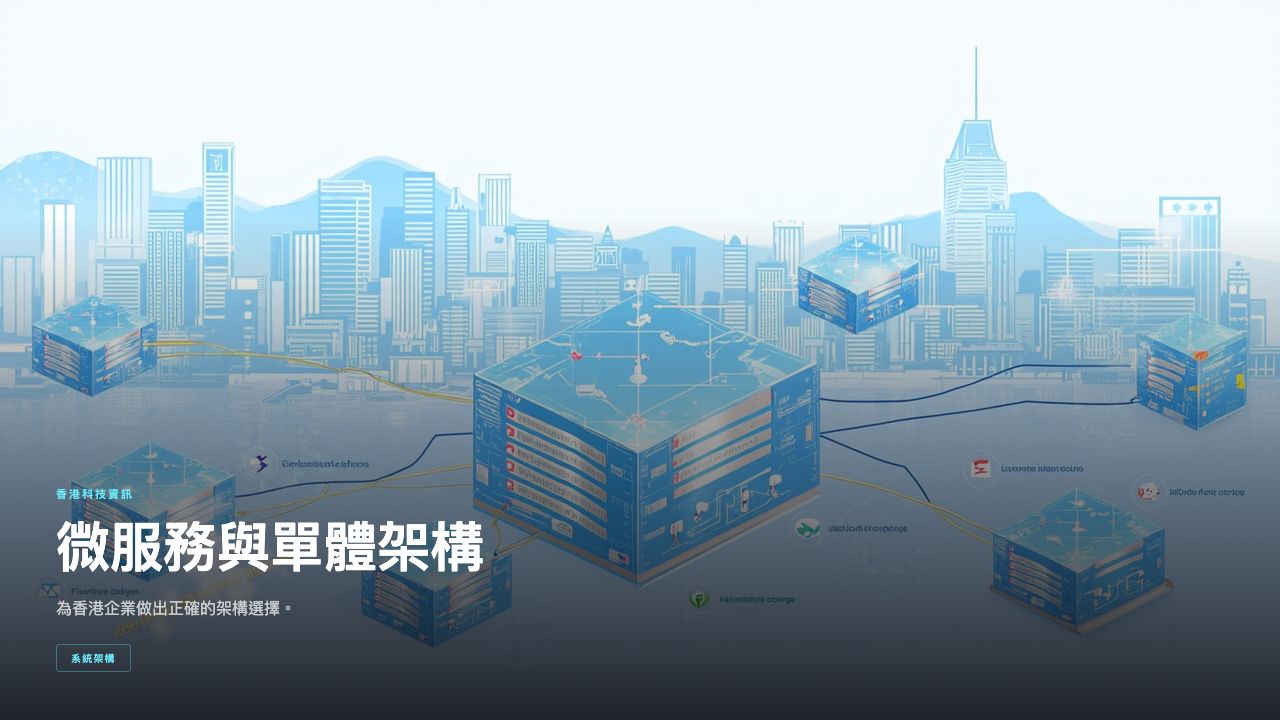
As Hong Kong companies accelerate digital transformation, the challenge of integrating legacy systems with modern cloud infrastructure has become critical. This guide explores practical integration architectures, real-world implementation patterns, and strategic approaches for businesses navigating the complex landscape of enterprise connectivity in 2026.
The Connected Enterprise Playbook: System Integration Strategies for Hong Kong Businesses in 2026
The frenetic pace of Hong Kong’s business environment leaves little room for systems that don’t communicate. Walk into the headquarters of a traditional trading company in Sheung Wan, and you’ll likely find a patchwork of enterprise resource planning software from the early 2010s sitting alongside bespoke databases holding decades of supplier relationships. Now imagine trying to connect that infrastructure to a modern e-commerce platform serving customers across the Greater Bay Area—it’s the kind of challenge that keeps IT directors awake at night.
Enterprise system integration has evolved from a technical nicety to a strategic imperative. In 2026, Hong Kong businesses face a unique convergence: the region’s position as a gateway between mainland China and global markets demands integration architectures that can bridge radically different technology ecosystems. Meanwhile, accelerating competition from digitally-native startups is forcing established enterprises to modernize or risk irrelevance. This guide examines the practical realities of building connected systems within the Hong Kong context, offering actionable frameworks for companies at every stage of their integration journey.
Understanding Hong Kong’s Integration Landscape
Before diving into technical architectures, it’s essential to recognize what makes Hong Kong’s enterprise environment distinctive. The city-state hosts over 1.4 million registered businesses, ranging from family-owned trading firms with a handful of staff to multinational financial institutions operating regional headquarters. This diversity creates a correspondingly varied technology landscape—one where a freight forwarding company might still rely on mainframe systems from the 1990s while a fintech startup operates entirely in the cloud.
Three factors shape integration priorities for Hong Kong companies specifically. First, cross-border data flows between Hong Kong and mainland China remain subject to distinct regulatory frameworks, requiring integration architectures that can respect these boundaries while maintaining operational coherence. Second, the proximity to both Western and Asian markets means many enterprises must integrate systems adhering to different standards and protocols. Third, Hong Kong’s mature financial sector has established rigorous requirements around data integrity and audit trails—integration solutions must preserve these guarantees even as they connect previously siloed systems.
Research from the Hong Kong Computer Society indicates that over 60% of mid-sized enterprises in the territory are currently undertaking some form of system integration or modernization initiative. However, the same studies suggest that nearly half of these projects exceed their original timelines, often due to underestimated complexity in connecting legacy infrastructure. Understanding this landscape is the first step toward navigating it successfully.
The Integration Architecture Spectrum
Hong Kong enterprises have access to a broader range of integration approaches than ever before, but this abundance creates its own challenges. Choosing the right architecture requires matching technical capabilities to business requirements while accounting for the unique constraints of the local environment.
Point-to-point integration—where individual systems connect directly to one another—remains surprisingly common in Hong Kong, particularly among smaller businesses. This approach offers simplicity in the short term: connecting System A to System B is straightforward to implement and understand. However, as organizations grow and add systems, point-to-point architectures become unmanageable. A company with ten integrated systems might find itself maintaining forty-five separate connections, each requiring its own monitoring, error handling, and maintenance. For Hong Kong trading companies that have grown through acquisitions, this scenario is far from hypothetical.
Middleware-based integration, using enterprise service buses (ESB) or integration platforms, addresses this complexity by providing a central hub through which all systems communicate. This approach offers better visibility and control but can introduce performance bottlenecks and becomes a single point of failure if not properly architected. Large Hong Kong banks have traditionally favored ESB approaches, and their experiences offer valuable lessons: success requires dedicated integration teams, robust governance frameworks, and significant investment in monitoring tools.
The most modern approach—API-led integration—treats each system as a collection of reusable services exposed through well-defined interfaces. This architecture supports rapid development, enables cloud-native deployment, and aligns with how leading enterprises structure their technology portfolios. Companies like HKTVmall have built their technology foundations around API-first principles, enabling rapid iteration and seamless integration with logistics partners, payment providers, and marketplace sellers. For Hong Kong businesses in 2026, API-led integration represents the destination, though the journey often requires transitioning through intermediate states.
Implementation Patterns for Hong Kong Industries
Theory becomes valuable only when applied to real contexts. Examining integration implementations across Hong Kong’s key industries reveals patterns that other companies can adapt to their own situations.
The financial services sector offers perhaps the most mature examples of enterprise integration in Hong Kong. The Hong Kong Monetary Authority’s Open API Framework has accelerated banks’ efforts to expose services to third-party providers, requiring robust integration architectures capable of handling high transaction volumes while maintaining stringent security controls. HSBC’s API platform, for instance, allows corporate clients to integrate transaction data directly into their own treasury management systems—a capability that required careful orchestration of mainframe systems, modern microservices, and external partner connections. Smaller insurance companies have taken different approaches: AIA’s digital transformation program emphasizes integration between customer-facing applications and backend policy administration systems, enabling real-time quote generation and claims processing.
Logistics and supply chain companies face distinct challenges, particularly those operating across the Hong Kong-Zhuhai-Macau Bridge corridor. Kerry Logistics, for example, has invested heavily in integration systems that connect container tracking data with customs clearance platforms, warehouse management systems, and customer visibility portals. The technical challenge is compounded by the need to exchange data with mainland Chinese systems operating under different standards—a problem that requires middleware capable of transforming data formats while maintaining speed for time-sensitive shipments.
The retail sector, meanwhile, demonstrates how integration enables omnichannel experiences. SOGO Hong Kong’s digital initiatives have focused on connecting point-of-sale systems with inventory management, e-commerce platforms, and loyalty programs. The result is a unified customer view that associates in-floor can access in real-time—a capability that required not just technical integration but organizational alignment around shared customer data. These examples illustrate that successful integration is never purely technical; it requires business process redesign and change management alongside technology implementation.
Building Integration Governance in Practice
Technical architecture matters, but governance determines whether integration capabilities deliver lasting value. Hong Kong enterprises that treat integration as a one-time project rather than an ongoing capability consistently struggle to maintain momentum and adapt to changing requirements.
Effective integration governance starts with clear ownership. Some Hong Kong companies establish dedicated integration teams reporting to Chief Operating Officers or Chief Digital Officers; others distribute integration responsibility across product teams with centralized standards and oversight. Both models can work, but clarity is essential—without defined ownership, integration efforts fragment and duplicate, with different teams implementing incompatible approaches.
Data governance represents a particular challenge in Hong Kong’s cross-border context. The Personal Data (Privacy) Ordinance governs how personal information can be collected, used, and transferred, but companies integrating with mainland systems must also navigate different privacy frameworks. Successful enterprises establish clear policies about where data resides, which systems can access it, and how cross-border transfers occur. Cathay Pacific’s approach to customer data integration illustrates best practices: sensitive information is pseudonymized before flowing to analytics platforms, and strict access controls govern which employees can link identity data to behavioral patterns.
API governance has emerged as a distinct discipline as organizations expose more interfaces to partners and customers. Leading Hong Kong enterprises maintain API catalogs documenting available interfaces, version history, and usage guidelines. They establish standards for API design—consistent authentication patterns, common error formats, naming conventions that align with business terminology. Some, like the airport authority, publish developer portals that allow external parties to discover and consume approved APIs, transforming integration from a technical burden into a business enabler.
The Path Forward: Integration as Competitive Advantage
As 2026 unfolds, the most forward-thinking Hong Kong enterprises are reframing integration from a technical requirement into a strategic capability. The companies gaining ground are those that treat their integration infrastructure as a product, continuously investing in its capabilities and treating internal and external customers as users whose needs evolve over time.
Consider the trajectory of traditional industries in Hong Kong’s business environment. The shipping sector, long dominated by established players with proprietary systems, is witnessing new entrants that have built integration into their core value proposition from day one. These companies connect directly to port systems, shipping line platforms, and customs databases, offering customers real-time visibility without the friction that legacy operators struggle to overcome. Established shipping companies are responding by accelerating their integration programs, but they face the dual challenge of modernizing while maintaining service continuity.
For companies at the beginning of their integration journey, the advice is pragmatic: start with clear business objectives, not technology fascination. Identify the integration capabilities that would deliver the most immediate value—perhaps connecting customer-facing systems with backend order management, or linking inventory systems across warehouses. Build the technical foundation to support these initial use cases while establishing patterns and governance that can scale to more ambitious initiatives. Resist the temptation to boil the ocean; instead, deliver visible wins that build organizational confidence and appetite for further transformation.
For companies already engaged in integration programs, the emphasis shifts to optimization and extension. How can existing integration patterns be reused to accelerate new initiatives? Where are integration bottlenecks limiting business agility? What emerging capabilities—real-time data streaming, AI-assisted mapping, automated testing—could improve integration velocity? The integration landscape continues to evolve, and maintaining competitive advantage requires continuous investment in both technology and talent.
Conclusion: Integration as Ongoing Capability
Enterprise system integration in Hong Kong in 2026 is neither a solved problem nor an insurmountable challenge. It is an ongoing capability that successful organizations build, refine, and extend over time. The companies thriving in the current environment share common characteristics: they understand their integration needs clearly, choose architectures appropriate to their scale and ambition, govern their integration assets effectively, and continuously invest in improving their connected enterprise.
The technical patterns are well-established. What distinguishes successful implementations is the organizational discipline to maintain momentum beyond initial deployments, the governance frameworks that ensure consistency across teams, and the strategic vision to treat integration capabilities as sources of competitive advantage rather than administrative overhead. For Hong Kong businesses navigating an increasingly connected world, these capabilities have become essential to long-term success.